NIHONKOSHI DEVELOPMENT (THAILAND)
case study
NIHONKOSHI DEVELOPMENT (THAILAND)
NIHONKOSHI DEVELOPMENT (THAILAND)
Construction Industry
Thailand


Company Name
NIHONKOSHI DEVELOPMENT (THAILAND)
Business Activities
The main contractor provides comprehensive construction management services, from design and planning to quality control, including the construction of exhibition booths. Their headquarters are located in Tokyo, Japan.
Services
KANNA Project
NIHONKOSHI DEVELOPMENT (THAILAND) is a Japanese construction company headquartered in Tokyo, which expanded into Thailand in 2022. Since then, the company has operated as a main contractor, with its primary clients being hotel management companies and condominium owners.
With its small but high-quality team structure, a key challenge for the company was to effectively facilitate information sharing among team members. This is why NIHONKOSHI DEVELOPMENT (THAILAND) decided to implement KANNA. What factors led to this decision, and what results has the company achieved today? We spoke with Asami Ryusoku, who oversees the company's operations in Thailand.
Background And Effects of KANNA Implementation
Issue
Images and documents for each project are scattered across Google Drive, while communication takes place via LINE, meaning information is primarily held by individuals, and the headquarters in Japan is unable to fully track progress.
Project management uses Excel, which means that if those responsible don't update the information, no one will see the true progress. Furthermore, there's only one copy of the original paper document, making it susceptible to damage or loss at the site.
Key Factors For Implementation
This is well-suited to the project-based management style in Thailand. Furthermore, the company conducted extensive testing before making a decision, ensuring that the Thai team could use it without problems, and that support was available in both Japanese and Thai.
Effects and Improvements
KANNA integrates all documents, images, contracts, invoices, and purchase orders. The approval process can be completed on a smartphone and can be done even outside the office.
Creating project plans using Excel is virtually eliminated, reducing paper usage by approximately 80%. Client reporting is faster, and on-time delivery has become a key strength in the company's reliability.
Person Interviewed

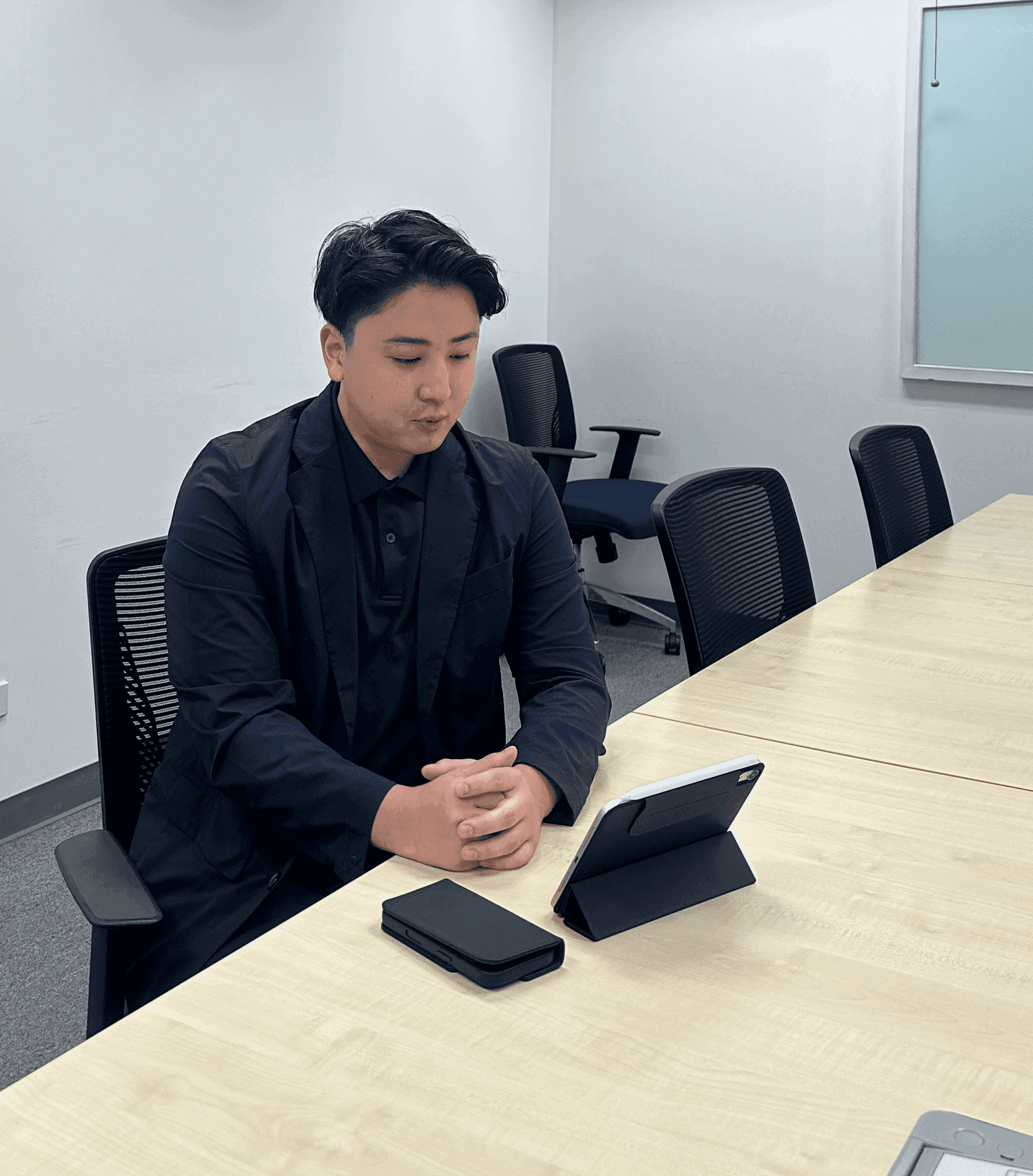
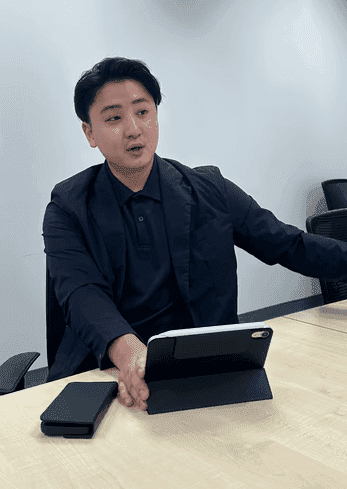
Ms. Asami Ryusoku, Managing Director, NIHONKOSHI DEVELOPMENT (THAILAND)
A Japanese construction company faces the challenges of being a main contractor in Thailand.
— First, could you tell me about the nature of the company's business?
Mr. Asami: Our company is a construction company headquartered in Tokyo, Japan. In Japan, we started as a subcontractor for general contractors, and currently, we continue to subcontract alongside acting as a main contractor, contracting on a project-by-project basis and overseeing the entire construction process, from design and planning to quality control. At the group level, we also have businesses related to construction security and a wholesale business selling construction materials such as traffic cones.
We entered the Thai market in 2022, seizing an opportunity. We established a company here and conduct construction business in the same format as in Japan, but in Thailand, we do not accept subcontracting work. Our main clients currently are hotel management companies and condominium owners.
Most recently, since around June of this year, we've also started taking on exhibition booth construction projects, as Thailand frequently hosts trade shows. Although our company hasn't had any prior experience in this area, we decided to start when we were contacted.
— So, what roles will Ms. Asami be responsible for?
Mr. Asami: Basically, I oversee the management of the company in Thailand and the overall operations. I coordinate with the Japanese side, track progress on the Thai side through KANNA, check the status of projects, and coordinate when problems arise with both the Japanese and Thai sides.
Our team includes construction engineers, a Project Manager responsible for drafting and design, and a sales team.
The information is being kept confidential by individuals, and there's the frustration of the "communication not reaching" the Japanese side.
— What problems did the company encounter before implementing KANNA?
Asami: Previously, most of the images and documents from each project were stored in Google Drive, and communication was primarily done through chat apps like LINE. However, the problem was that the data became stored with individual persons. Even I, who oversee management, wasn't always sure if the data had been uploaded to Google Drive. The Japanese side faced the same problem; it was difficult to manage. This was our biggest challenge.
For the project planning, we primarily use Excel. Therefore, if the person in charge doesn't update the information, no one will be able to see the progress of the work. And because only the person in charge can edit that file, neither I nor the other team members can make any changes.
Furthermore, Thailand has a strong culture of using paper documents. Carrying original documents is therefore common. However, when there is only one copy of the original, leaving it at the worksite risks getting dirty or damaged. In the past, we have even encountered incidents where documents were almost lost.
— I heard that reporting to the Japanese side is also having problems.
Asami: When reporting to the Japanese side, we have to communicate with people who have never been to the actual site, so they can't visualize the situation. Even if we attach photos and videos in a Google Drive folder, it's still difficult to communicate the information. But if we organize the folders more precisely to solve this problem, we end up not being able to find the information we need anymore.
The Thai team understood the situation on the ground well, but the information wasn't reaching the verification and approval departments. Even though we and the team were working correctly, misunderstandings arose regarding what had been "done" or "not yet done," even among the Japanese team members themselves.
No matter how well we manage construction projects and control quality, while we can still see the actual progress from Thailand, it's difficult for those at headquarters in Japan to personally inspect the work. Reporting becomes a problem, and when information sharing is inadequate, progress management seems successful but is ineffective in reality.
Furthermore, when Japanese customers inquire about progress and we send them the project plan, if the plan is not the latest update, we have been asked, "Isn't the work a little behind schedule?"
The system, designed for Japanese use, is hindering progress on the project in Thailand.
— When you used KANNA, did you compare it to other tools?
Ms. Asami: Actually, we weren't making any comparisons. We were only considering using KANNA alone.
Previously in Japan, we used a different system, but at that time, the nature of work in Japan and Thailand was quite different. The Japanese side was only responsible for parts of a project overseen by a large contractor, while in Thailand, we worked on entire projects. Because of this significant difference in management styles, we felt it was a major problem. As for managing images and documents, ultimately, we had no choice but to use Google Drive.
Although we had previously submitted a request, because the decision-making criteria were primarily based on the Japanese side of the business, the Thai side naturally became a secondary priority. To be frank, the results were not what we expected.
— So, what was the reason for choosing KANNA?
Asami: It all started with my relationship with Aldagram. While I was communicating the issues I mentioned earlier to the Japanese side, I was contacted by Aldagram.
Regarding our decision-making process, firstly, we conducted real-world testing and found that our Thai team could use the system without problems. We also recognized that our existing issues could be resolved. This was the most important factor. Furthermore, having support available in both Japanese and Thai was another crucial factor, for which we are truly grateful. Every time a new employee joins, the team contacts them and provides training, which has been incredibly helpful to us to this day.
Both project planning and approval can be completed on a smartphone, reducing paper usage by 80%.
— How are you currently using KANNA?
Ms. Asami: The main function we use is sharing information, such as documents and images of each project, as well as managing project progress. There were many situations where we needed to explain the progress to the residential building management company. Before, we had to create Excel files ourselves and send them or share our screen. Now, we can display the project plan directly on the website and also export it as an Excel file. This makes it easier for us to view the data. Suppliers also see the same data, which has become one of our selling points.
In terms of documents, in addition to contracts and invoices with customers, KANNA's approval function has recently been updated. We can now approve documents received from suppliers and purchase orders we issue ourselves through KANNA. Previously, the approval process required a separate system, necessitating frequent switching between systems and requiring a computer. While this wouldn't be a problem if we were in the office all the time, we often had to be on-site. Now, we can do everything in one place and process transactions via mobile devices even when outside the office. This is a significant change.
Regarding chatting, we used to use group chats on LINE, but LINE has limitations on data retention, meaning previously sent messages can no longer be viewed. In contrast, images and information shared on KANNA never expire, which is also very beneficial.
— In terms of quantity, what changes have occurred?
Ms. Asami: Planning using Excel has practically disappeared. Of course, some clients still require paper documents due to internal organizational regulations, which we adapt to. Overall, however, we've reduced paper usage by about 80%, both for construction documents and files like 3D PDFs of design work. Fundamentally, everything can be shared digitally, so the amount of printed documents has decreased accordingly.
The way tasks are handed over has also changed. When a new employee joins, we can immediately give them past work and tell them to review the content and continue working in the same format. Everything is much more visible than before, making task handover easier.
Timely reporting leads to customer trust and repeat business.
— How have customer relationships been affected?
Ms. Asami: Hotel clients place great importance on project schedules because even a delay of just one day can impact the opening date. If we can't deliver on time, it's difficult for clients to return for future services.
For projects with a one-month timeframe, we typically report progress weekly. However, in reality, deviations from the plan are frequent. Using KANNA, we can see in detail how many days the project is delayed and at which stage the delay is occurring. This greatly simplifies reporting and meetings with clients. And with this reduced workload, we can use our available time more efficiently.
The fact that we can report more frequently and quickly, I feel, has led to direct trust from clients, and thankfully, we've also been getting more new project inquiries.
— Suppose KANNA is no longer around tomorrow, what would be the impact?
Ms. Asami: If you think about the time it takes to write a report or to create a project plan from scratch, these tasks are incredibly time-consuming. Our company doesn't have a large number of employees, but we work in small, high-quality teams. I think that would definitely reduce our responsiveness to customers.
The faster you respond to customers, the better. Good news may not be as urgent, but bad news is absolutely crucial because what has already happened cannot be changed. Delayed reporting directly impacts relationships and trust.
Another point is, I've already informed the client that we use this system. If this system is removed, our image in the client's eyes will revert to its previous state, and we won't be able to provide proof of our work when questioned about whether "we can really continue with the project."
From trade shows to real estate, aiming for centralized management of the entire group of companies.
— Moving forward, in what direction do you plan to use KANNA?
Ms. Asami: As a company in Thailand, in addition to our existing construction work, we have recently started a business constructing exhibition booths.
Our trade show booth construction business primarily focuses on working with international companies. Currently, we work with companies from Turkey, but in the future, we will add companies from the Middle East, India, and Europe. As a result, the volume of information will increase significantly, and because trade shows are held in various locations every day, the amount of deals, communications, and documents will also increase accordingly.
In addition, we've also started receiving inquiries to work as real estate brokers. I'd like to use KANNA to manage everything related to the buildings, from brokerage to construction. If we could register each property as a project, keep maintenance records, or set up advance reminders before the next contract renewal, I think it would greatly improve our workflow.
At the group level, we are considering expanding our business to other countries in Southeast Asia, and in the future, we would like to be able to manage all operations centrally for the entire group.
— Finally, I'd like to leave a message for companies in the same industry that are considering on-site DX or operational improvements.
Ms. Asami: It might sound like I'm speaking from a high-minded perspective if you call it advice, but when we first started doing business in Thailand, we also did everything using paper documents. This led to similar misunderstandings and data loss.
If we manage things systematically, we can always go back and check past data, and the data will not be lost. Japan is currently promoting this as well, while Thailand still has a strong culture of using paper documents. I think that when we can operate and check data regardless of location, work efficiency will increase accordingly.
Among small companies, some believe that traditional work methods are sufficient. However, if they aim for continued growth, the smaller the company, the more important it is for each person to manage their own work efficiently and dedicate more time to sales. Therefore, I believe that smaller companies should increasingly adopt systems to minimize non-value-adding tasks. For this reason, I recommend that companies with similar concerns consider using tools like KANNA.
Article Published on: