Monitor Projects Spread Across Multiple Cities in Real-Time — PT Adi Raha Dani Manages Design & Build from Upstream to Downstream with KANNA
case study
PT Adi Raha Dani (ARD)
Monitor Projects Spread Across Multiple Cities in Real-Time — PT Adi Raha Dani Manages Design & Build from Upstream to Downstream with KANNA
Construction Industry
Indonesia
Company Name
PT Adi Raha Dani (ARD)
Business Activities
Design & Build — Civil Engineering & Interior Construction
Services
KANNA Project
KANNA Report
The KANNA project management application is now used by more than 70,000+ companies across various industries ranging from construction, manufacturing, to IT solutions. KANNA was chosen because it is easy to use, both from the management team in the office and the team in the field.
In this interview, we spoke with Mr. Tommy and Mrs. Natasha as the owners of PT Adi Raha Dani, a design & build company that handles construction and interior projects for clients spread across various cities. We explored the challenges behind the implementation of KANNA, and how KANNA has now become the backbone of their operations from end to end.
Background And Effects of KANNA Implementation
Issue
Projects are spread across many cities, even within a single city like Jakarta, where project locations are spread across various points, making it difficult to monitor project conditions in real-time.
High reliance on field supervisor reports to determine project progress, resulting in frequent delays and inefficiencies in updates.
Project data is scattered across many folders, making it difficult to retrieve quickly when the site manager or owner needs information.
Key Factors For Implementation
The need to monitor cross-city projects in real-time and unify all project data from upstream to downstream in one centralized platform.
Effects and Improvements
Project monitoring becomes real-time, site managers and owners can immediately view data without having to wait for reports from supervisors.
KANNA is used from upstream to downstream: from incoming leads, estimators, production, material time schedules, field progress recording, to after-sales.
Each division is monitored more efficiently, projects run more smoothly, and reports to clients are more up-to-date.
Person Interviewed
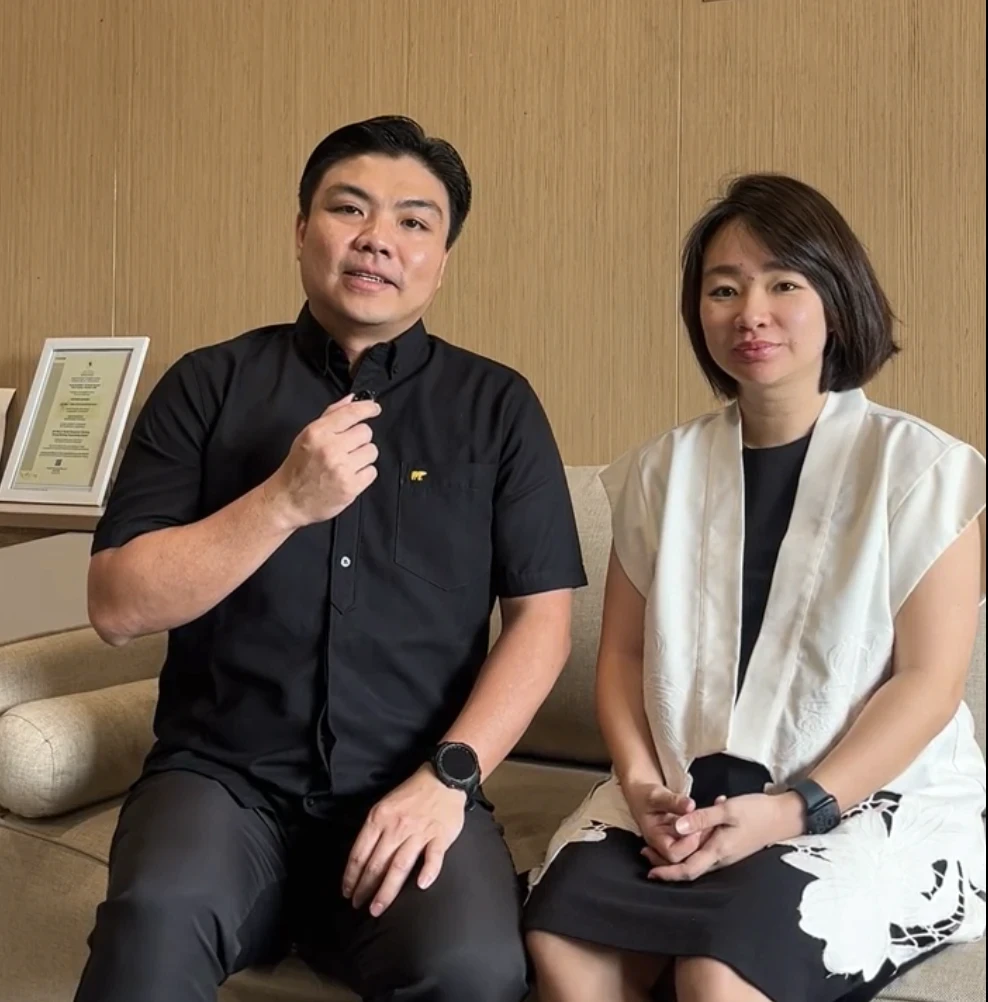
Mr. Tommy & Mrs. Natasha - Owner of PT Adi Raha Dani
Monitor Cross-City Projects in Real-Time Without Relying on Field Supervisors
— What was the biggest challenge in coordinating design to the field before using KANNA?
Our biggest challenge before using KANNA was that our project locations were spread across many cities. Even within a single city like Jakarta, our project locations were also spread across various points. Things like this became the main challenge for monitoring project conditions in real-time.
Since using KANNA, we can see project conditions in real-time. While we used to rely heavily on reports from field supervisors to monitor progress, now we can maximize KANNA to see real-time reports directly from the field. The supervisor's role has become much more effective after using KANNA. KANNA also really helps us with data organization. If we have many projects, usually the data is scattered across several folders. But with KANNA, everything is on one platform, we can pull data quickly. Our site managers, even the owner himself, can immediately see the data without having to wait.
KANNA is used from upstream to downstream — from incoming leads to after-sales.
— What processes are used to monitor KANNA in a project?
We use KANNA from the time leads come in, then for estimating, production, field progress recording, and our production progress. We use KANNA from upstream to downstream, from incoming leads to after-sales. For more details, on the production side, we also use KANNA for material time schedules, field time schedules, progress reports to clients, and even progress reports from vendors to us.
Projects Run Smoother with Real-Time Monitoring per Division
— What's the most noticeable change after using KANNA?
After using KANNA, we can monitor projects in real time. Furthermore, we can monitor each of our divisions more efficiently. What we've noticed most is that our projects are now running much smoother. Every division has equal visibility into project progress, which speeds up coordination between teams and eliminates any divisions from being left behind.
Key Features: Dashboard, Gantt Chart, and Task Management
— What features are most helpful in ensuring the design is executed well?
The features we use most are the Dashboard and Gantt Chart, followed by Task Management. We use the Gantt Chart extensively in the production and design teams. It helps us control the time schedule and budget. Its numerous functions could be quite lengthy if detailed individually. Clearly, the combination of the Dashboard + Gantt Chart + Task gives us complete control over the project timeline and costs.
Schedule, Budget, and Design Updates — All Monitored in One Place
— In closing, why is KANNA important for ARD's design & build projects?
By using KANNA, we can monitor the project schedule and budget directly. Furthermore, we can also perform design actualization to ensure that the design executed in the field aligns with the planned design. Equally important, we can also provide much more up-to-date reports to clients. In the design & build industry, the ability to present accurate and timely progress is a key differentiator. KANNA helps us achieve that.

Article Published on: