40% reduction in administrative workload. Thorough customer management builds trust and leads to securing large-scale contracts with major dealers.
case study
Pal Communications Co., Ltd.
40% reduction in administrative workload. Thorough customer management builds trust and leads to securing large-scale contracts with major dealers.
Electricity, Gas, Heat Supply, and Water Services
Japan
1-49 Employees


Company Name
Pal Communications Co., Ltd.
Number of Employees
20
Business Activities
Electrical and communication construction, radio interference investigation, solar power generation systems, EV charging equipment
Services
KANNA Project
Pal Communications Co., Ltd. expanded its business from telecommunications construction to now have a proven track record nationwide in the installation of EV charging equipment. In a complex B2B2C business model involving many stakeholders, the company faced challenges of complicated information sharing and personalization. In this article, we spoke with Sales Manager Ishizawa and Sales Support Representative Hara about how the introduction of KANNA not only significantly streamlined administrative work, but also contributed to sales by securing new contracts with major car dealerships.
Background And Effects of KANNA Implementation
Issue
Complex business flows and personalization of information: There are many people involved, including our own company, dealers, partner companies, and customers, and there are frequent disputes over what was discussed.
Different means of communication: Requests are made by phone, email, fax, and other methods, so only the person in charge knows the situation.
Hard photo management: It is time-consuming to import photos from digital cameras and send them by email, making it difficult to share them in real time.
Key Factors For Implementation
Intuitive operation that requires no explanation: Easy to understand and can be used immediately even by affiliated companies and dealer personnel who are unfamiliar with IT tools.
Functions as a "customer chart": Items can be set based on the customer, and progress can be managed centrally.
Low hurdles for external collaboration: We are confident that collaboration with external parties will be smooth.
Effects and Improvements
Reduce administrative work by 30-40%: Eliminate manual Excel entry. 200-300 customer records can all be viewed by looking at KANNA.
Winning contracts with major dealers: Our secure customer management system was highly praised, leading to successful contracts with major dealers.
"The password is KANNA." A tool that connects trust and security: Color-coding of statuses and reporting functions ensure zero missed responses .
Person Interviewed

Taku Ishizawa, Sales Manager, Niigata Sales Office, Pal Communications Co., Ltd. Kaori Hara, Sales Assistant, Niigata Sales Office
Dealers, partner companies, and end users: EV charging equipment construction involves multiple actors
-- First, please tell us about your company's business and an overview of your EV charging equipment-related business.
Mr. Ishizawa: Our company operates from two bases, with our headquarters in Niigata City, Niigata Prefecture, and an office in Tokyo. We were originally in the telecommunications industry, but as times have changed, we have shifted to electrical work, which is closer to the construction industry. Our current main businesses include EV charging equipment, solar power generation, LED installation, and radio wave interference investigations. Our team is particularly focused on EV charging equipment, a business that has only begun to gain momentum over the past five years.
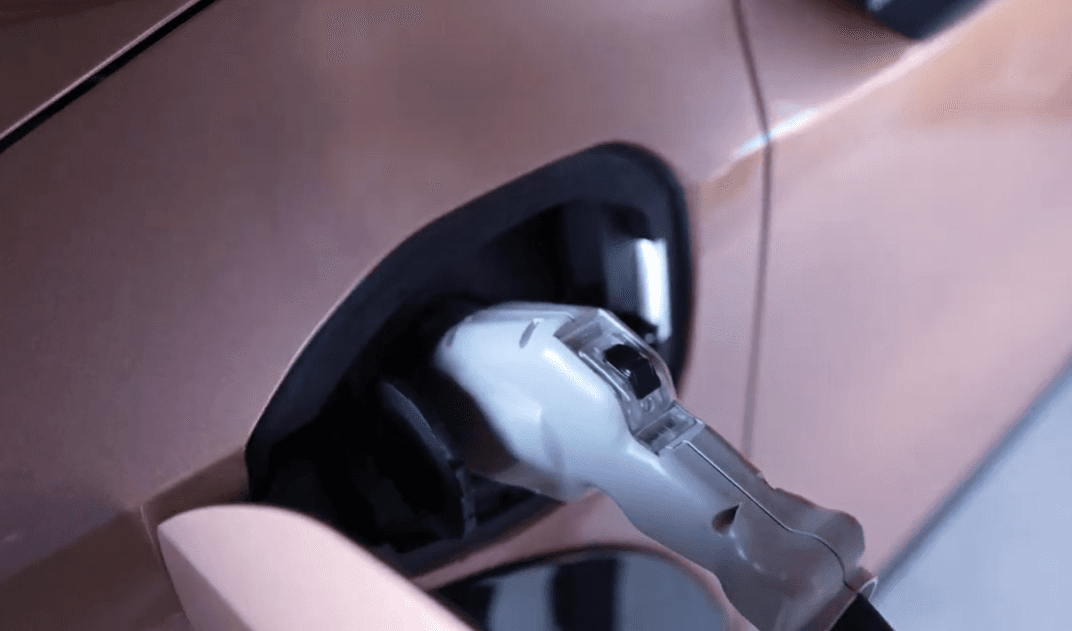
Our business is characterized by both B to B and B to C, but our primary clients are car dealers. Most of our projects come from dealers of major car companies, with around 90% being referrals, and only around 10% being direct requests from end users. When you buy a car, you buy it from a dealer, right? It's the same with electric cars, but for charger installation, we are introduced to the dealer. We enter into a contract with our customers, keep their information, and work with partner companies across the country to handle everything from appointments to on-site surveys, estimates, and installation.
Risks arising from “he said, she said” situations and the individualization of information.
-- What were the most common problems with the previous progress management system?
Ishizawa: This business is characterized by the large number of parties involved, including our company, dealers, customers, and local partner companies. Previously, there was no standardized method for project applications, and they came in via email, phone, fax, and other methods. This made it easy for information to become personalized, and when the person in charge changed, information could be lost, problems arose over "said/not said" issues, and communication costs for progress checks were incurred.
Hara: Managing on-site photos was also difficult. It was time-consuming to import photos taken with a digital camera or smartphone into a computer, sort them into folders, and then create Zip files and send them by email. Some partner companies would send them via social media apps, but in the end, the photos had to be transferred to a PC for internal management. This was time-consuming and made sharing in real time difficult.
Emphasis on "intuitive usability" over " multi-functionality "
-- What were the deciding factors in introducing KANNA?
Ishizawa: We've tried various tools to improve work efficiency in the past. However, they didn't take root within the company because they had too many functions and were difficult to use intuitively. In order to smoothly collaborate with many people, including external dealers and partner companies, we felt that a tool that was easy to understand and intuitive for anyone to use was more important than a multi-functional tool . In fact, I was once invited to use KANNA as an external member for a project with a major company, and I was impressed by how easy it was to use. That's how I first learned about KANNA. The deciding factors in introducing it were its overwhelming intuitive operability and customizability, which allows us to freely set items to suit our work . In our case, we wanted to use it like a "customer chart" to track progress for each customer , rather than simply managing the site , and we were convinced that KANNA could make that happen.
Use it as a "customer management chart" and manage status centrally with color coding
-- How are you currently using KANNA?
Hara: We use KANNA as a management tool for each "customer (individual)" rather than for each "construction site." Specifically, we input the customer's name, vehicle model, delivery date, desired date for on-site inspection, etc. into a template, and collect the information just like a "medical record."
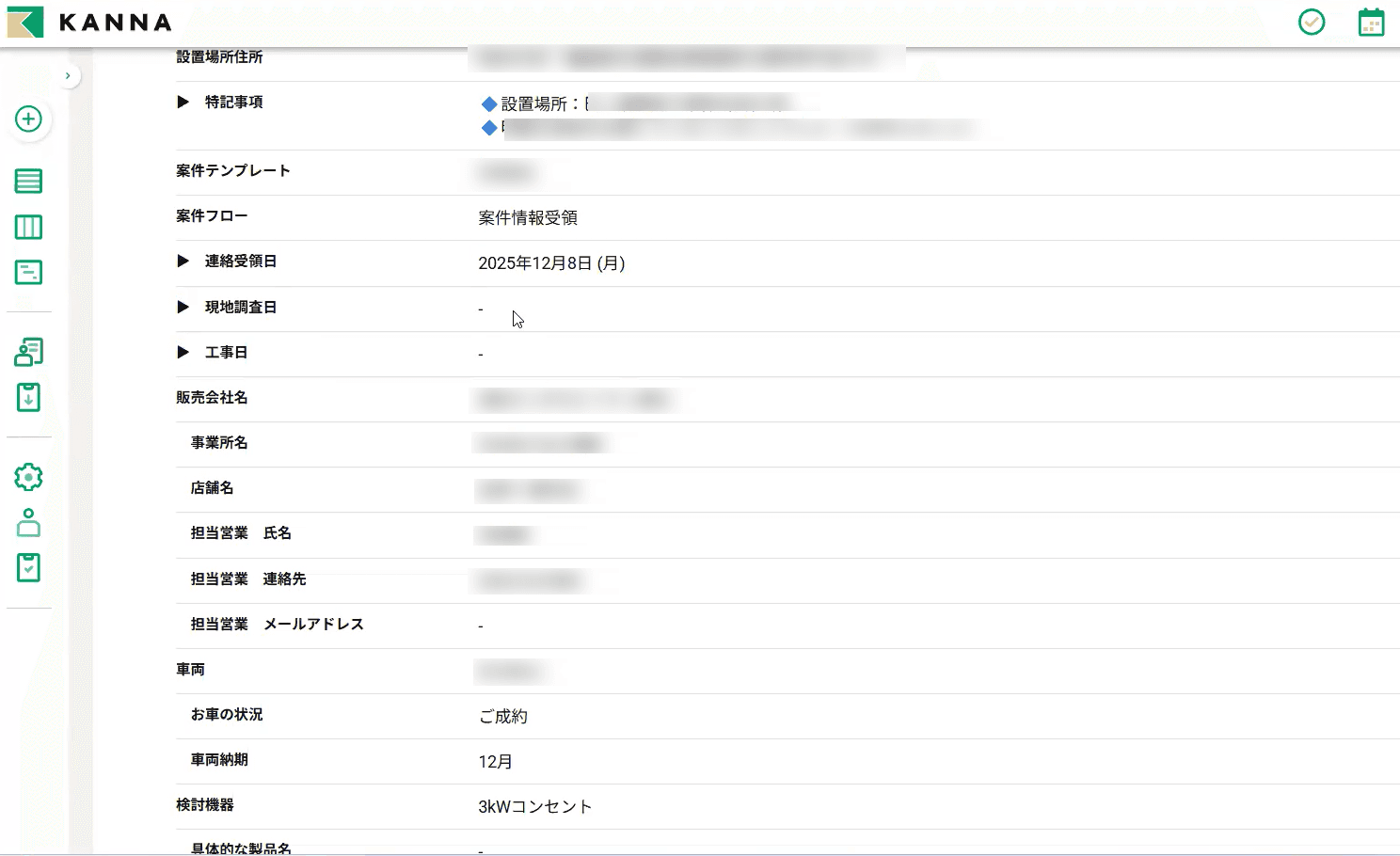
We are particularly making use of the "progress management" function. We visually manage statuses such as inquiries, on-site inspections, estimates, contracts, scheduling of installation work, and completion of work by color-coding them. This allows us to share the progress of each project in real time, as notifications are sent not only to our employees but also to dealership personnel. We also make use of the on-site reporting function, and by having employees upload photos from their smartphones immediately after on-site inspections and completion of work, we have drastically reduced the amount of paperwork we have to do after returning to the office.

▲ "Progress" is color-coded by category, making it easy to see the status at a glance.
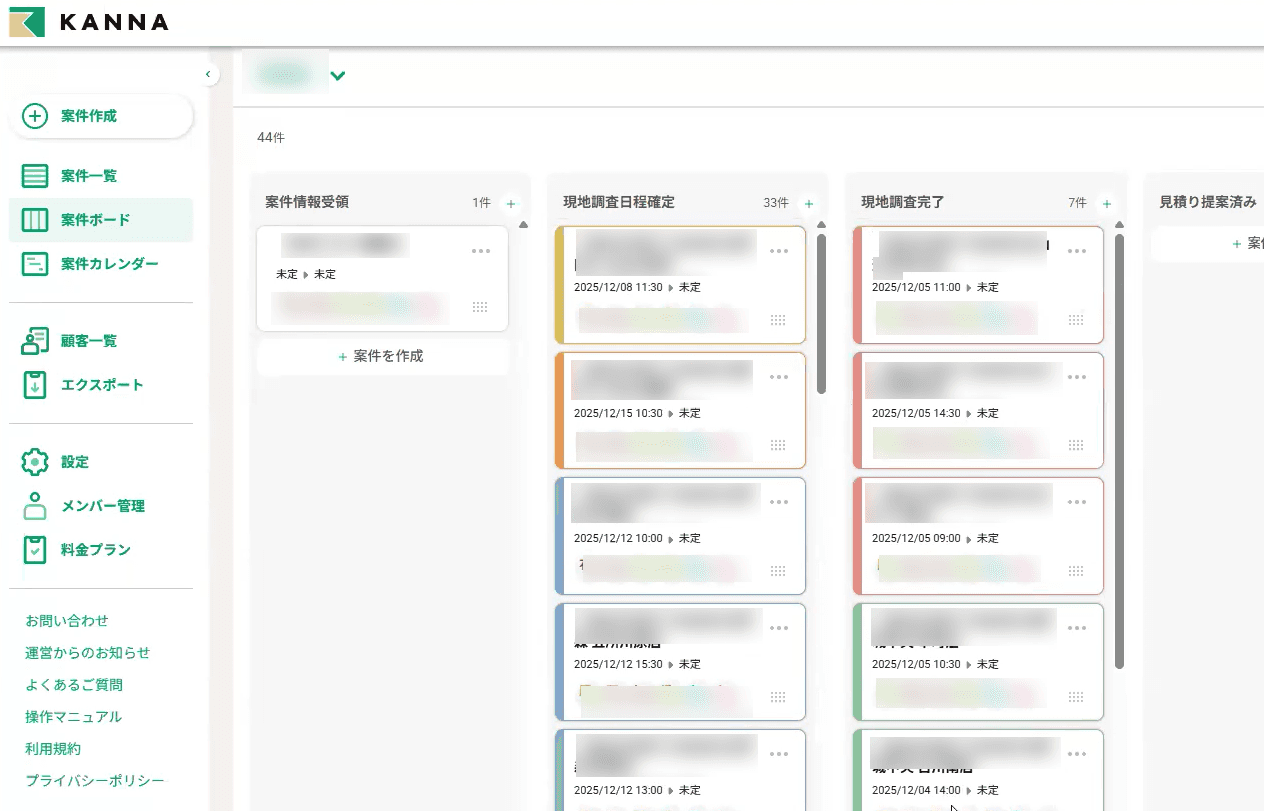
▲ Each project is colored in a box. The boxes are color-coded by area: yellow = Akita Prefecture, red = Yamagata Prefecture, and blue = Aomori Prefecture.
40% reduction in administrative work. Furthermore, the "reliable management system" was highly evaluated and a large contract was acquired.
-- Compared to before implementing KANNA, how much has the effort required for project management been reduced? Please tell us about the benefits you have experienced.
Mr. Ishizawa: I feel that we've reduced administrative work by about 40% . Previously, we had to manually input data into Excel, but now that we've consolidated the management tasks into KANNA, it has become significantly more efficient. The biggest benefit is that the cluttered information in my head has been organized . Previously, we managed customer information on paper documents, checking and adding information, but now we can centrally manage even more information on KANNA. Thanks to this, we can instantly check and update necessary information even when we're out and about , dramatically improving our on-site mobility. And the most important benefit I want to share with you is its contribution to sales . This summer, we signed a new contract with a major automobile dealership. In their B2B2C EV charging installation project, the dealership was experiencing major challenges with managing customer information and avoiding problems. So, when we presented our solution, explaining that "using KANNA would allow us to visualize progress and prevent customer management issues," they highly praised our management system, leading to a contract. Now, it is not just a tool for improving business efficiency, but a powerful sales tool for differentiating from other companies and gaining trust.
Aiming for "complete automation of order taking"
-- Are there any business systems you would like to achieve using KANNA in the future, or new ways you would like to use it?
Ishizawa: Going forward, we would like to move forward with automating the entry stage, that is, order processing. We would like to link KANNA with online application forms and create a system where the information entered by customers and introducers is reflected directly in KANNA. If this becomes a reality, not only will it eliminate the hassle of inputting information, but it will also create a smoother, more error-free system, which we believe will be even more appealing to our business partners.

"The password is KANNA." A tool that connects trust and security
-- Finally, if you were to recommend KANNA to companies doing similar work, what would you tell them?
Ishizawa: To be honest, I don't really want to tell other companies in the same industry about it because it would increase our competition (laughs). But if I had to recommend it, I'd say it's "cost reduction through centralized management" and "avoidance of trouble." It smooths collaboration between vertical (in-house) and horizontal (with partner companies and business partners), allowing for risk management while protecting important customer information. Currently, the common language within the company and among partner companies is "Just put it in KANNA for now" and "Keep an eye on KANNA ." "The password is KANNA" - just this word alone can share a sense of security and trust, and I think that's what the KANNA tool is all about.
Article Published on: